Metal Fume Extraction: What Your Laser Workshop Actually Needs
Dealing with metal marking fumes is non-negotiable for fiber laser safety and health. This guide from our workshop covers what extraction equipment you actually need, and why a simple fan isn't enough.
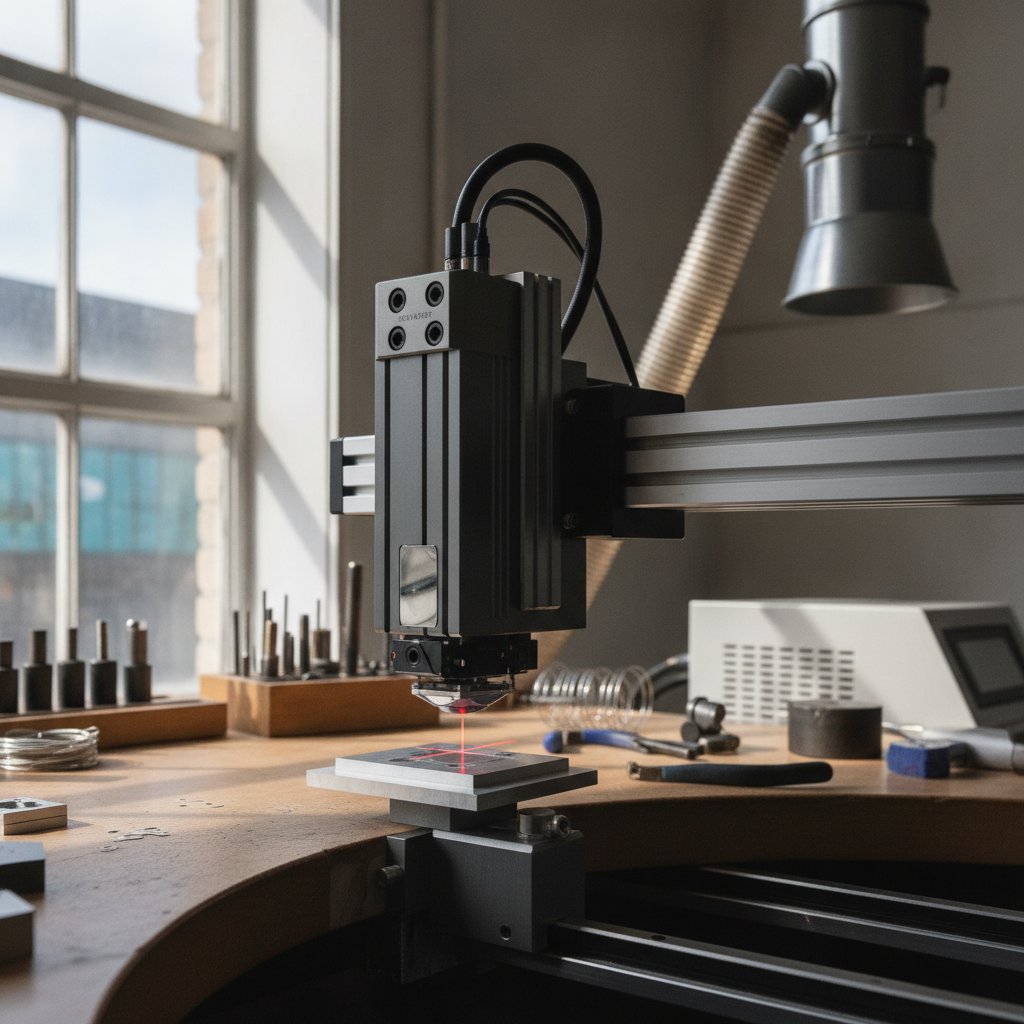
If you are marking or cutting metal with a fiber laser, you are producing metal fume and fine particulate. Ignoring it is not an option for your health or your machine's longevity. This guide explains what real laser fume extraction looks like, how to set it up, and why you need more than a simple fan.
We learned this the hard way in our jewelry workshop in Málaga, Spain, cutting and engraving sterling silver daily. We lost too much time and material to problems that proper ventilation would have prevented, and we don't want you to repeat our mistakes.
Why Proper Fume Extraction Is Non-Negotiable
A fiber marking laser is a Class 4 machine. The beam and its reflections cause permanent eye damage instantly and silently. 1064 nm is invisible: you never see the beam that blinds you. Laser safety glasses rated for 1064 nm (with an OD suitable for the source power) must be worn by everyone in the room, always. Metal is a mirror: reflections go everywhere.
Beyond the beam, the process itself creates hazards. Metal marking produces metal fume and fine particulate — extraction with a proper filter is health equipment, not an accessory. You must never leave a running job unattended.
When you laser engrave or cut metal, you are essentially vaporizing tiny amounts of material. This creates a plume of extremely fine metallic particles and, depending on the material, potentially harmful gases. Sterling silver, our main material, produces very fine, dark particulate.
Inhaling these fumes can lead to serious respiratory problems over time. Even if you don't feel immediate effects, the cumulative exposure is dangerous. Beyond health, these microscopic particles can settle on your machine's optics, reducing its effectiveness and potentially causing damage. A dirty lens means less power reaches your workpiece and more passes are needed, slowing down your work.
The Problem with "Just a Fan"
Many new laser users, or those migrating from simpler machines, think that a window fan or a shop vacuum will suffice for workshop ventilation. This is a dangerous misconception for metal marking fumes:
- No Filtration: A fan simply moves the air, and with it, the harmful particulates, from one place to another. If you're venting outside, you might be polluting the environment or your neighbors' air. If you're venting inside, you're just recirculating the danger.
- Wrong Filtration: A shop vacuum might capture some larger dust, but its filters are not designed for the sub-micron metal fume particles produced by a laser. These fine particles will pass right through, or quickly clog the filter, rendering it useless.
- Fire Risk: Some materials (especially non-metals, but even metal dust in high concentrations) can be combustible. A standard vacuum or fan motor is not explosion-proof and can create sparks.
What You Actually Need: A Dedicated Fume Extractor
For fiber laser metal marking, you need a dedicated fume extraction system specifically designed for industrial air purification. These systems typically include multiple stages of filtration:
- Pre-filter: This first stage captures larger dust and debris, protecting the more expensive filters downstream. It prolongs the life of your HEPA and activated carbon filters.
- HEPA Filter: A High-Efficiency Particulate Air (HEPA) filter is the core of metal fume extraction. It's designed to capture at least 99.97% of particles that are 0.3 micrometers in diameter. This is crucial for the ultra-fine metal dust generated by your laser.
- Activated Carbon Filter: While pure metal fumes are primarily particulate, an activated carbon filter captures volatile organic compounds (VOCs) and odors. While less critical for pure silver or gold, it's essential if you're marking coated metals, plastics, or other materials that release gases. It's good practice to have it for comprehensive workshop ventilation.
These systems are closed-loop, meaning the filtered air is returned to your workshop, clean and safe. This avoids expelling pollutants and prevents heat loss in colder climates or heat gain in warmer ones.
Cost Considerations
A proper fume extractor is an investment. It will cost significantly more than a household fan or shop vac. However, consider the alternatives:
- Health: The cost of chronic respiratory illness far outweighs the cost of an extractor.
- Machine Longevity: Protecting your optics from corrosive metal dust saves on costly repairs and replacement parts for your laser.
- Consistency: Clean optics mean consistent power delivery, which translates to better, more predictable marks and cuts. As we often say, "It worked last month" is not a setting; consistent machine health helps keep your recipes reliable.
Remember to factor in the recurring cost of replacement filters. Pre-filters need changing most often, followed by HEPA and then activated carbon. The lifespan depends on your usage and the materials you process. Reduced airflow or a noticeable smell are clear signs it's time for a change.
Setting Up Your Extraction System
Once you have the right equipment, proper installation is key to effective laser fume extraction.
Ducting: Short, Straight, Sealed
The ducting connects your laser enclosure to the extractor. Think of it like a plumbing system: any bends, constrictions, or leaks will reduce efficiency.
- Keep it Short: The shorter the duct run, the less resistance the air faces, and the more effective your extraction will be.
- Keep it Straight: Avoid unnecessary bends and elbows. Each turn drastically reduces airflow. If you need to bend, use smooth, wide radius bends rather than sharp 90-degree elbows.
- Seal Everything: Use appropriate clamps and sealant to ensure all connections are airtight. Any leaks will pull in ambient air instead of the contaminated air from your laser, reducing the system's effectiveness.
- Material: Flexible aluminum ducting is common, but ensure it's rated for industrial use and can handle any potential heat or sparks.
Nozzle Placement
The intake nozzle of your extractor needs to be positioned as close as possible to the point where the fumes are generated. For galvo fiber lasers:
- Inside the Enclosure: Ideally, the nozzle is placed inside your laser's safety enclosure, near the marking area. This captures fumes before they can escape.
- Directed Flow: Position the nozzle so it directly pulls the plume of smoke and particulate away from your workpiece and, crucially, away from your lens. Dust settling on the lens is a common cause of poor performance and damage.
Checking Airflow
How do you know if your system is working effectively? We do a simple visual check:
- The Tissue Test: Hold a light tissue paper near your laser's marking area with the extractor running. The tissue should be visibly pulled towards the intake nozzle. If it just flutters weakly, your airflow might be insufficient or you have a leak.
- Visual Inspection: During operation, you should see the smoke plume being rapidly pulled into the extractor's intake, with minimal escape into the enclosure or the room.
For more detailed information on overall safety, including physical interlocks and glasses, you can refer to our article Class 4 Laser Safety: The Honest Workshop Checklist for Fiber Lasers.
Common Mistakes and How to Avoid Them
In our experience, these are the most common missteps with laser fume extraction:
- Underestimating Metal Fumes: Many think metal marking only creates sparks, not "smoke." But it generates invisible, sub-micron particles that are easily inhaled and damaging.
- Using the Wrong Equipment: A domestic air purifier, a woodworking dust collector, or a standard shop vac will not provide adequate laser fume extraction for metal. Their filters are not fine enough, and they often lack the necessary airflow or safety features.
- Neglecting Filter Changes: Filters are consumables. Over time, they fill up and become less effective. Reduced airflow, a noticeable smell, or visible dust escaping are all signs you need new filters. Keep spares on hand so you don't have to stop production.
- Poor Ducting Installation: Long, winding, or leaky ducts choke your system's performance. Invest time in a clean, short, sealed setup.
- Ignoring the Black Edge: Even with perfect extraction, laser-cut or deep-engraved silver will have a black, oxidized edge. This is normal and requires post-processing. Good extraction helps keep the rest of the piece clean, but the edge still needs polishing. We cover this in detail in The Black Edge: Finishing and Polishing Silver After Laser Work.
Here’s a quick summary of what to look for and what to avoid:
| System Type | Suitability for Metal Marking Fumes | Key Characteristics & Concerns |
|---|---|---|
| Simple Fan & Duct (Venting Outside) | Not suitable | Moves air but does not filter fine metal particulate. Pollutes environment. |
| Woodworking Dust Collector | Not suitable | Filters designed for larger wood dust, not sub-micron metal particles. Potential fire risk with sparks. |
| Dedicated Industrial Fume Extractor (HEPA + Activated Carbon) | Essential | Multi-stage filtration for fine particulate (HEPA) and odors/gases (activated carbon). Recirculates clean air. |
Practical Takeaways for Your Workshop
If you're reading this because you just got a laser or suspect your current setup isn't enough, here’s what we recommend you do today:
- Evaluate Your Current Setup: If you're not using a dedicated industrial fume extractor with HEPA and activated carbon filtration, it’s not adequate for metal marking.
- Research Dedicated Systems: Look for extractors specifically marketed for laser fumes or welding fumes, as these are designed for fine particulate. Check filter availability and cost.
- Plan Your Ducting: Before your extractor arrives, figure out the shortest, straightest path from your laser enclosure's fume port to where the extractor will sit.
- Install Carefully: When it arrives, take your time to install the ducting, ensuring all connections are sealed.
- Test Thoroughly: Use the tissue test and visually confirm strong airflow and effective fume capture before running any production jobs.
- Stock Up on Filters: Order at least one spare set of filters (pre-filter, HEPA, carbon) so you are not caught off guard when replacements are needed.
Proper laser fume extraction is a critical component of a safe and efficient laser workshop. Don't compromise on it – your health and the longevity of your machine depend on it.