MOPA vs Q-switched Fiber Lasers: What Changes on the Bench
As a jewelry workshop cutting and engraving sterling silver daily, we’ve seen the real-world differences between MOPA and Q-switched fiber lasers. Here’s what matters on your bench.
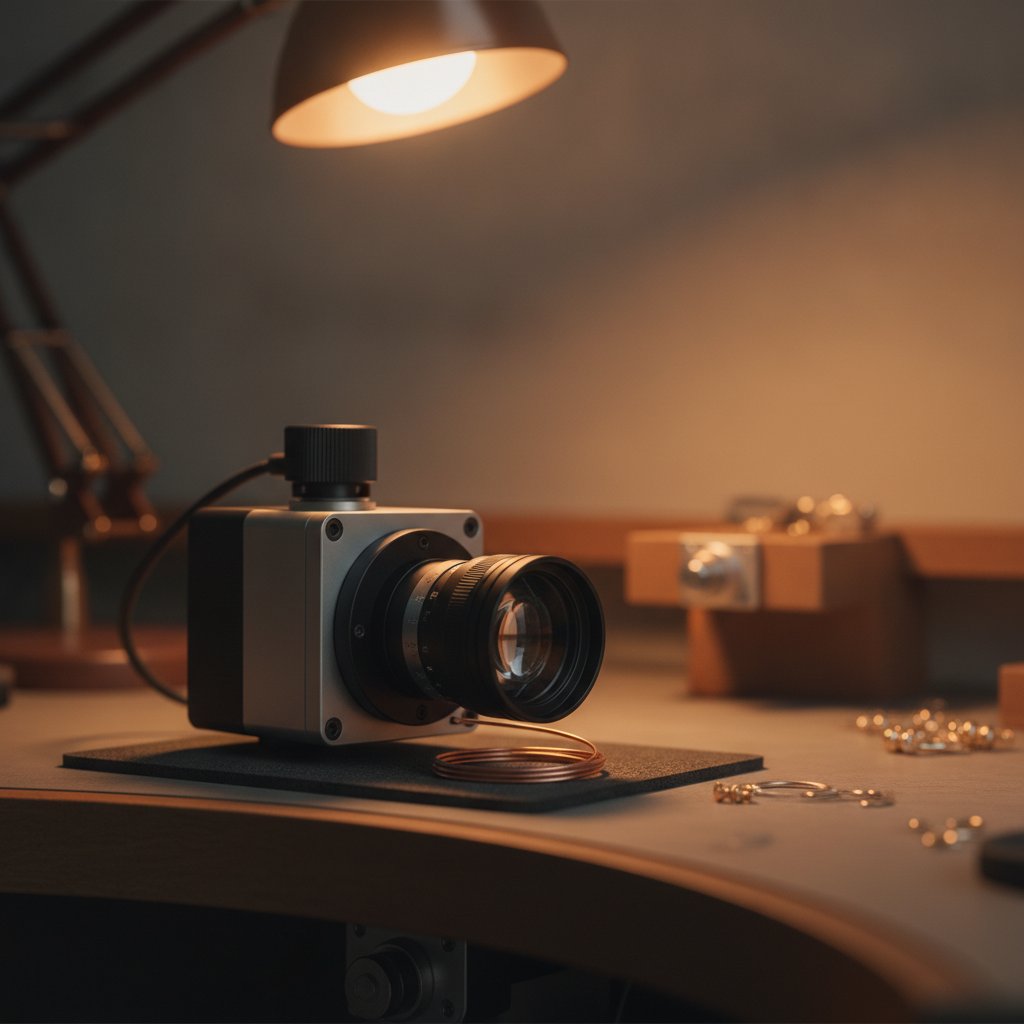
If you are looking at a galvo fiber laser for your workshop, you’ve probably seen the terms MOPA and Q-switched. For us, running a jewelry workshop in Málaga, Spain, and cutting sterling silver daily on a 100 W MOPA machine, the differences are not just technical specifications – they change how we work and what we can achieve. The core difference is how each type of laser generates its pulses, and that affects everything from engraving depth to color marking.
Understanding the Core Difference: Pulse Generation
Both MOPA and Q-switched lasers are fiber lasers, meaning the laser beam is generated and amplified within an optical fiber. They are excellent for marking, engraving, and cutting metals, plastics, and various other materials. However, their internal architecture leads to distinct operational characteristics.
- Q-switched lasers are the traditional workhorses of the fiber laser world. They generate short, high-energy pulses by storing energy in the laser cavity and then releasing it in a burst. The key is that their pulse characteristics—like pulse width and repetition rate—are often fixed or have a very limited range, determined by the laser's design.
- MOPA fiber lasers (Master Oscillator Power Amplifier) are more advanced. They allow independent control over the pulse width (how long each laser pulse lasts) and the pulse repetition frequency. This flexibility is the MOPA's defining feature, giving it a much wider range of interaction with materials.
For a user on the bench, this means a Q-switched laser gives you a powerful, consistent pulse, while a MOPA fiber laser lets you dial in the pulse to suit the material and the effect you want.
MOPA's Edge: The Tunable Pulse Width
The ability to control the pulse width in nanoseconds is where a MOPA fiber laser truly sets itself apart. A Q-switched laser operates with a fixed pulse width, typically in the range of 100 to 200 nanoseconds, or a few options around that. Our MOPA source, by contrast, exposes a table of pulse widths from 2 ns all the way up to 250 ns.
What does this control give us?
- Long Pulses (150-250 ns): These deposit more energy into each shot. They are ideal for applications requiring significant material removal, such as deep engraving and cutting. For example, our silver engraving recipe uses a 200 ns pulse width to achieve the depth we need for enamel filling. These longer pulses are also what helps us push through thicker metals for cutting.
- Short Pulses (2-20 ns): These deliver less energy per shot but can achieve very precise, gentle interactions with the material. They are crucial for tasks like color marking on stainless steel, where specific oxide layers are formed by finely controlled heat. They also excel at marking delicate plastics or anodised aluminum more gently.
The chosen pulse width remains active until you change it. It is a setting of the laser source itself, not something that changes with each line or shape in a job. This flexibility makes the MOPA fiber laser a much more versatile tool for a workshop handling diverse materials and finishing requirements.
Q-switched Lasers: Reliable Performance for Core Tasks
While MOPA lasers offer more control, Q-switched lasers are by no means inferior for many common workshop tasks. Many, if not most, affordable galvo fiber lasers ship with a Q-switched source, and they are capable machines.
Their strengths lie in their simplicity and consistent energy delivery:
- Consistent Power: Q-switched lasers deliver a reliable, high-energy pulse that is excellent for deep, clear marking and engraving on many metals. For workshops focused primarily on a few materials and consistent marking depths, a Q-switched laser is often more than sufficient.
- Ease of Use: With fewer variables to adjust (no pulse width to set), Q-switched lasers can be simpler to get started with. This can be an advantage when you need to quickly achieve a standard mark without extensive parameter testing.
For many traditional jewelry engraving and cutting tasks, especially where extreme fine-tuning of surface appearance or color marking is not required, a Q-switched laser can be a very effective and cost-efficient choice.
On the Bench: Cutting and Engraving Sterling Silver
Our daily work involves cutting and engraving sterling silver, which is one of the most challenging metals due to its high reflectivity and thermal conductivity. Here’s how MOPA vs Q-switched impacts our specific workflow:
Cutting Sterling Silver
Both types of fiber lasers can cut silver, but the MOPA’s ability to use long, energetic pulses is an advantage. For cutting, we rely on a high frequency to ensure a rapid succession of pulses and a consistent melt pool. Our machine uses:
- Power: 95 %
- Speed: 190 mm/s
- Frequency: 60 kHz
- Wobble: Enabled, with a diameter of 0.15 mm. (A tiny wobble, like 0.015 mm, will prevent cutting entirely by not ejecting melt, even if all other settings are perfect.)
Pass count is the main lever for cutting. For our 100 W MOPA, our measured pass counts for sterling silver are:
| Sterling Silver Thickness | Measured Passes |
|---|---|
| 0.25 mm | ~2 (derived) |
| 0.3 mm | ~2 (derived) |
| 0.5 mm | ~6 (derived) |
| 0.8 mm | 17 |
| 0.9 mm | 21 |
| 1.0 mm | 28-29 |
These are our specific numbers, calibrated on our machine and our harder silver alloy. Always test on scrap. We found that dropping the frequency for cutting, even with a MOPA, actually made it cut worse; high frequency wins for through-cutting.
For a Q-switched laser, without the option to extend pulse width, you might need more passes or a slower speed to achieve the same cutting depth, as each individual pulse delivers a fixed amount of energy.
Engraving Sterling Silver
For deep engraving, especially for enamel filling, the MOPA's ability to use longer pulses and lower frequencies becomes very powerful. Engraving depth per pass follows the energy per pulse, which is roughly average power divided by frequency. This is a genuinely counter-intuitive point we learned the hard way:
Our 100 W MOPA source initially engraved shallower than a 30 W machine on the same material. We were running at 40 kHz; the 30 W machine was at 30 kHz. Its individual pulses were fatter, so it dug faster despite a third of our average power.
By dropping our MOPA’s frequency to 30 kHz and using a long pulse width (200 ns), we match the depth of the 30 W machine. Our confirmed recipe for deep silver engraving that gets filled with enamel is:
- Power: 100 %
- Speed: 600 mm/s
- Frequency: 30 kHz
- Pulse Width: 200 ns (MOPA only)
- Passes: 10
For a Q-switched laser, with its fixed pulse width, achieving deep engraving might require more passes or slower speeds, or you might be limited by the inherent pulse energy of the source. While still effective, the MOPA offers more precise control over the depth and quality of the ablation.
Remember that silver is the most reflective and thermally conductive of the common precious metals, making it uniquely challenging to work with. Gold, for example, is noticeably easier to cut and engrave because it absorbs more of the laser beam. You can read more about this in Why Gold is Easier to Laser Than Silver (and How to Tame Silver).
Beyond Metals: Other Materials and Special Effects
This is another area where the MOPA fiber laser truly earns its place in a versatile workshop.
- Color Marking on Stainless Steel: This is the MOPA's party trick. By precisely controlling pulse width, frequency, and speed, you can create a range of oxide layers on stainless steel, resulting in various colors. A Q-switched laser, with its fixed pulse characteristics, cannot achieve this level of color control.
- Gentle Marking: For heat-sensitive plastics or anodised aluminum, the MOPA's ability to use very short, low-energy pulses allows for a gentle surface mark without melting or damaging the material.
If your work extends beyond basic marking and deep engraving on a few metals, the MOPA offers a broader palette of possibilities.
Safety First, Always
Regardless of whether you use a MOPA or Q-switched source, a fiber marking laser is a Class 4 device. The 1064 nm beam is invisible and causes instant, permanent eye damage. Always wear laser safety glasses rated for 1064 nm with an appropriate OD, ensure proper fume extraction for metal particulate, and never leave a running job unattended. Physical interlocks are your real protection, not software.
Practical Takeaways for Your Bench
When weighing a MOPA vs Q-switched fiber laser, consider your primary applications:
- For General Metal Marking and Deep Engraving: A Q-switched laser is a powerful and reliable choice. It handles most common tasks well, including cutting and engraving sterling silver, though it might require more passes or slower speeds for deep work compared to a MOPA.
- For Versatility and Fine Control: If you need to achieve color marks on stainless steel, work gently with delicate materials, or fine-tune engraving depth and texture across a wide range of materials, a MOPA fiber laser offers unparalleled control through its adjustable pulse width.
- Focus on Energy Per Pulse: Remember that for depth, it's often the energy per pulse that matters more than the raw wattage. A 100 W MOPA at a high frequency might engrave shallower than a 30 W Q-switched at a lower frequency if the Q-switched delivers fatter individual pulses. Adjusting frequency (and pulse width on a MOPA) is a powerful lever. You can learn more about how speed, frequency, and power interact in Marking, Engraving, and Cutting on Fiber Lasers: What Actually Changes.
- Calibration is King: No matter your laser type, always calibrate settings on scrap material of the exact thickness and alloy. Write down your winning recipes, including power, speed, frequency, passes, and focus height. Our provided numbers are a starting point for our machine and our material; yours will vary.
- Expect the Black Edge: After cutting or deep-engraving silver, the edges will be oxidized and black. Polishing is a normal part of our workflow to bring back the shine.
Ultimately, both types of lasers are incredibly useful tools. The choice between MOPA and Q-switched comes down to the specific demands of your workshop and the range of materials and effects you wish to achieve.